|
The band were very successful playing the club
and university circuit and started out playing mostly covers of rock
songs, although their trademark was to choose songs that were less
well known or technically difficult to play well. By the end of 1978
the band were playing mostly original material and had begun to tour
extensively in both the North and South of Ireland, making a name
for themselves in many of the more popular rock venues. Brian was
forced to leave the band for personal reasons in October 1978 and
was replaced by another former Jay Arthur Band bassist, Billy
McNeill.
Ironically, Street’s biggest break came in November 1978 when they
asked The Jay Arthur Band’s founder and guitarist, John Hilton, to
manage them, despite having already poached three members of his
band. Under John’s management, the band began to play larger venues,
touring regularly and growing in popularity, particularly in the
South, where they achieved virtual ‘cult’ status.
What made their music unique was the fact that all of the band
members were multi instrumentalists and each was influenced by
different genres encompassing blues, rock, folk and R & B. This
mixture of influences was apparent in both their live performances
and studio work. Their performances would move effortlessly from
raunchy progressive rock into a solo instrumental acoustic set and
on into blues and psychedelic rock. But, despite the range of
styles, you were never in any doubt that you were listening to
Street.
A trademark of the band was the five-part harmony vocals that
featured in many of their songs. This even included a vocal only
track in the middle of an R & B set.It was also not unusual to see
the drummer playing blues harp while the lead singer played the
drums, or the lead guitarist and bass player exchanging roles.
Street were also very much about entertaining and involving the
crowd and will be remembered, even in larger venues, for taking a
fully miked floor tom-tom into the audience and allowing fans to
play along to improvised riffs. The band’s versatility was further
enhanced in April 1979 when rhythm guitarist Robert Agnew was
replaced by Stevie Browne, formerly of Badger, who brought a country
rock edge into the mix.
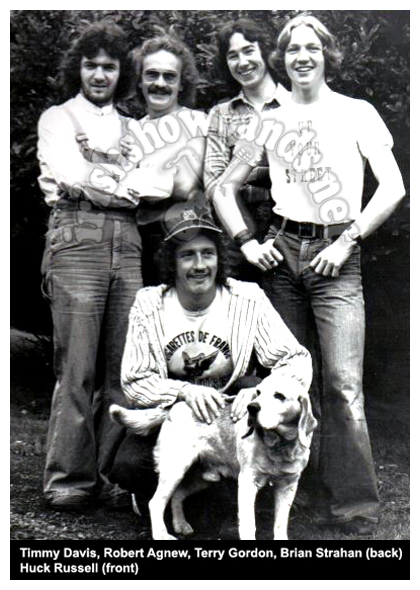
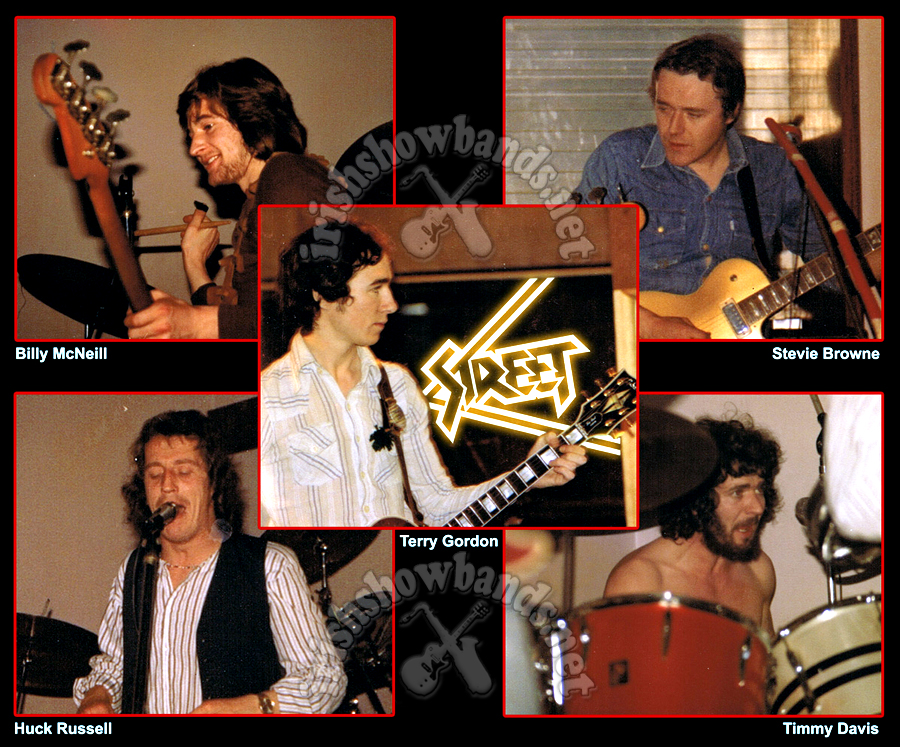
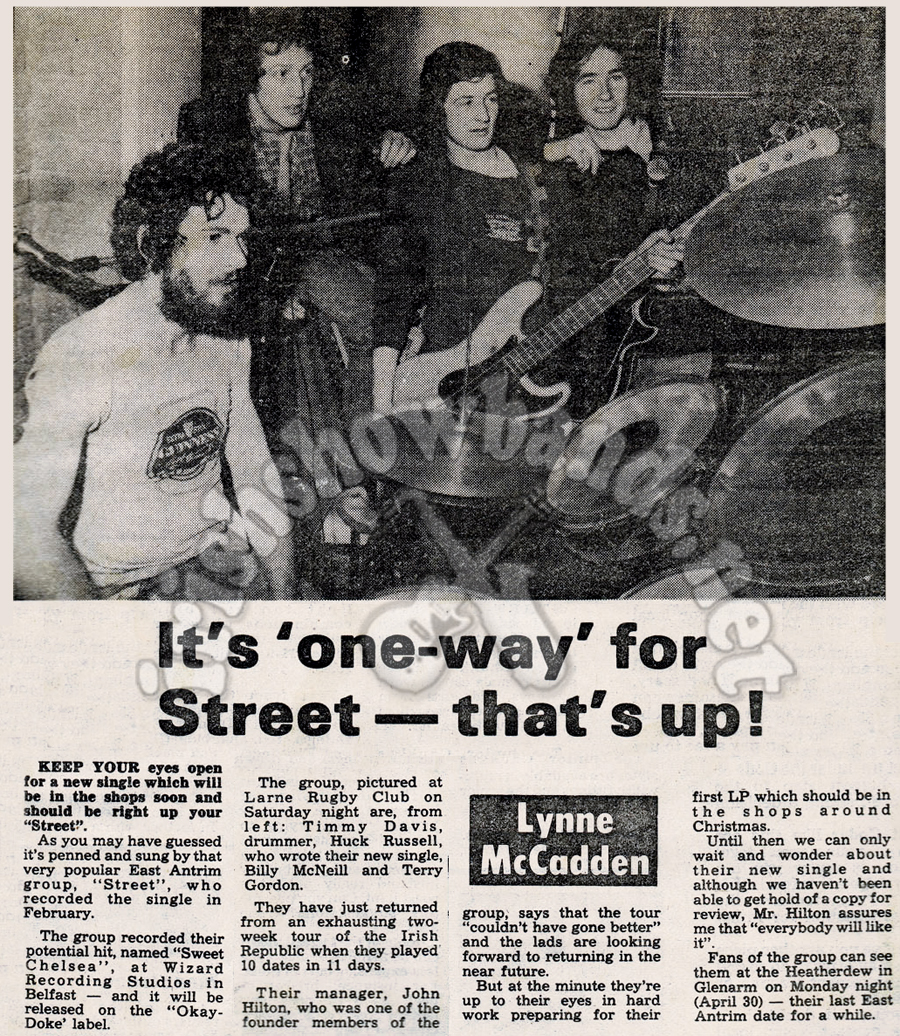
The final line-up of the band now consisted of: Terry Gordon, Trevor
'Huck' Russell, Stevie Browne, Timmy Davis and Billy McNeill.
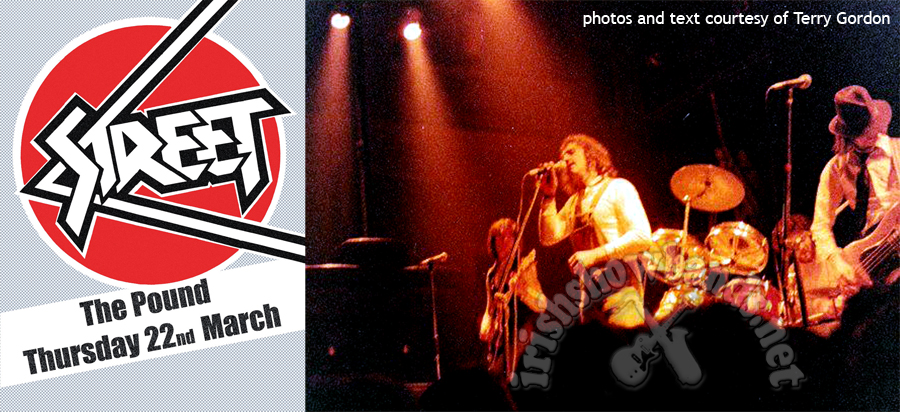
As well as major venues like the Ulster Hall in Belfast, Leisureland
in Galway, Downtown Campus, The Showboat in Waterford and the
Universities, the band made regular appearances at the top rock
venues of the time including The Pound, Kelly’s, The Toll Bar, The
Rocking Chair, etc.
They also had a bit of a reputation for upstaging some of the bigger
bands they occasionally supported. At one memorable gig in
Waterford, having finished their support slot for the reggae band
Steel Pulse, Street were asked by Steel Pulse to return to the
stage, when the crowd chanted for them. The night ended with both
bands jamming together in the encore.
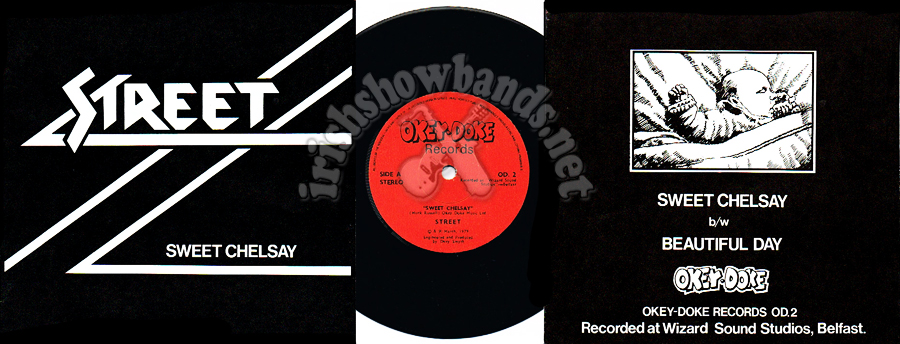
Street recorded their first single, Sweet Chelsay (commonly misspelt
as Chelsea or Chelsae) at Wizard Recording Studios in Belfast. It
was released under the Okey-Doke label in March 1979. The single was
widely acclaimed, selling thousands of copies on the band’s
subsequent tour. By May it was being played on Radio stations across
Ireland and was record of the week on both the John Peel and Kid
Jensen Shows in the same week.
The band had also started recording an album, due for release in
December 1979 and had been lined up for an appearance on The Old
Grey Whistle Test to coincide with its release. Given the unique mix
of musical preferences, it is hardly surprising that the album
(Boulevard) featured everything from heavy metal, to blues, to folk.
However, it was around this time that things began to go wrong for
Street.
Due to issues with the record company (Okey-Doke), a second printing
of the single was never issued and, despite a massive demand, there
were simply not enough singles in the record shops and it never made
the UK charts. These same issues stopped the album from being
released and, without an album, the Whistle Test appearance had to
be cancelled.
Despite these setbacks, the band continued to work, waiting for the
record company to sort out the problems. They went on to support
Motorhead in February 1980 at the Ulster Hall and turned down the
opportunity to tour with them because they had already been tipped
to support Thin Lizzy on their ten date Irish tour in April 1980.
As it happened this was not to be. A van carrying much of the band’s
gear was involved in a serious accident in Éire that destroyed a lot
of expensive equipment and left one man seriously injured. To add
insult to injury, a clause in the insurance contract made it invalid
outside the U.K. and, with no cash to replace the equipment, Street
were forced to cancel their touring commitments for the foreseeable
future. (The Thin Lizzy tour was later offered to The Tearjerkers).
You could be forgiven for thinking that Street were one of the
unluckiest bands in the world. With cancelled tours and television
appearances, an album that was recorded but never released, a
dynamite single that never hit the record shops, no transport and no
equipment, the band finally decided that fate was against them. In
May 1980 the band mutually agreed that it was the end of the road or
should we say - the end of the Street.
Many of the band members are still playing in local bands. Terry
Gordon went on to front Midlands rock outfit Desperate Measures
which featured James Morrison’s mum, Susie Gale on vocals. |