|
Book Reviews
|
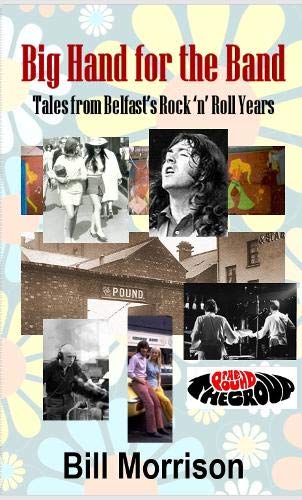 |
A Big Hand For The Band -
Tales From Belfast's Rock 'n' Roll Years - Bill Morrison - €13.00
(Waterstones and others). Review by
Francis K. Beirne

A 336-page paperback (14 x 22 cm.) with free CD, published by
Motelands Publishing. Printed and bound by CPI
Group, Croydon, 2015.
A book about a beat-group with a forgettable name (tell
that to Robbie Robertson!), relatively unknown outside its
hometown, Belfast, should not work. It shouldn't be 336
pages long and it shouldn't be a riveting read - but it
is!
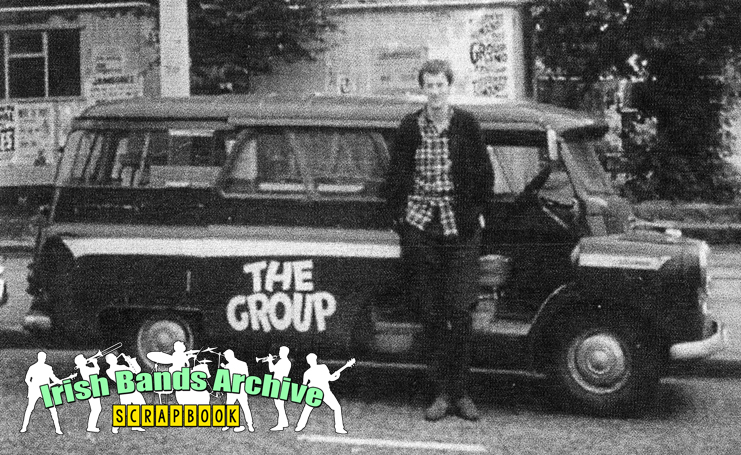
Bill Morrison played keyboards in The Group, a
4-piece pop, rock and blues group (oh no, not a showband!)
and he conjures up a fascinating story, inspired by an
old reel-to-reel tape which had been "languishing in a
cardboard box for 45 years". The recording of The Group
was made in 1968 in The Pound and the Astor Marquee on a
Grundig reel-to-reel reciorder with
a little plastic Grundig microphone hanging in front of
a P.A. speaker. |
|
Most musicians will have their
own funny anecdotes about comments or questions from
punters. I can recall comments such as "Yis are
f**** brutal" and "Can ye play that one by The Kinkers?" Early in the book, Bill tells a story
about the time an girl shouted up "Hey Mister, d'yous do the Who's?"
If you're trying to work it
out - she wanted something by The Who. Incidentally,
Bill once met drummer Keith Moon on a flight to St.
Lucia.
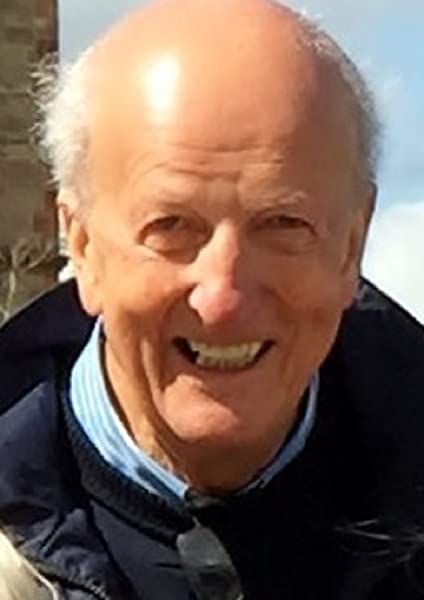
Bill, who became a town planner in Belfast
when he retired from the stage, is a natural
storyteller. Some of the dialogue is very funny.
Like the time someone suggested adding a horn
section . . .
"I refused to play the trumpet.
'In that case, we'll just have to headhunt guys from
other bands to play with us, who plays trumpet with
Dave Glover?' 'Dave Glover you eejit'." |
 |
|
From The Dominoes through to The Group, you'll
hear mention of some legendary musicians and
characters such as Gary Moore, Teddie Palmer, Robin
Irvine, Ricky McCutcheon, Keith Donald, Jim
Armstrong, Ray Donnan, Tiger Taylor, Roy Kane, Billy
Harrison, Fred Isdell, Peter Lloyd, Paul Lyttle,
Dick Pentland, Sam Mahood, Van Morrison among others along with
bands such as Alleykatz, Exiles, Tigers, Interns,
Freshmen, Moses K. & The Prophets, The Federals,
Chips, Them, Tony & The Telstars. |
 |
There are 60+ photos in the book, all black and
white. The CD is playing as I type.
Vocal harmonies are brilliant, drumming is Keith Moonish. It opens with The Who's 'I Can See For
Miles' followed by 'Good Vibrations', an
ambitious choice for a live show, as was 'God
Only Knows'. The Beach Boys were clearly an
influence as there are four of their songs in total.
Other tracks include 'Morning Dew', 'Even The Bad
Times Are Good', 'Baby, Now That I've Found You'
and 'Something You Got'. I'd love to have
been there. |
|
|
|
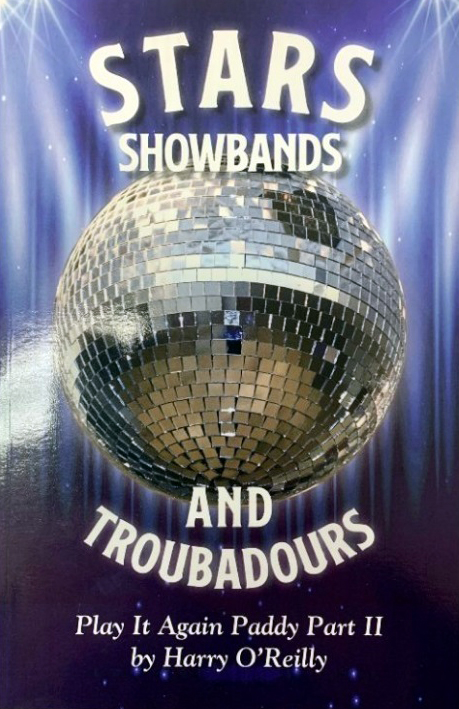 |
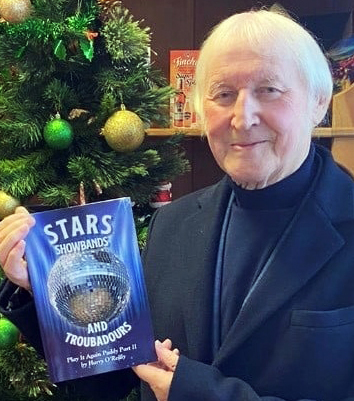
Stars, Showbands and
Troubadors - Harry O'Reilly - €20.00. Review by
Francis K. Beirne
A 208-page paperback (15 x 23 cm.), published by Harry
O'Reilly / Printed and bound by Anglo Printers, 2020.
Where will you meet The Troggs, Daniel O'Donnell and Pope
Francis within a few pages of each other? In this book, the
follow-up to Harry O'Reilly's 2012 book,
'Play It Again, Paddy'. It will be of immense
interest to Drogheda musicians, their families and friends
and anyone who danced in Drogheda in the 1960s. There are
detailed sections on the Abbey Ballroom (1961-1969) and on
many locals including Jim 'Jazz' Delaney, the Judge
Brothers, David Leddy, Tom McCann, Gerry Mulroy, Paul
Martin and Stephen Milne. The story of Joey
Maher and his family covers five chapters, a story which I
found fascinating. |
|
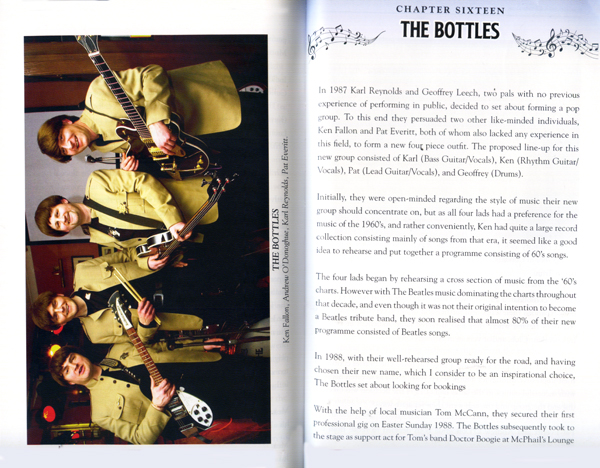
Stories of local bands are also
documented. I had never heard of The Bottles (a
Beatles' Tribute band with a clever name) but I had
heard of Custer's Last Band who had a brief stab at
fame in 1980. There is an interesting chapter on the
Drogheda Male Voice Choir which includes in its
ranks former Clubmen and Tigermen singer, Timmy
Regan and a chapter on singer Mary Duff, who has
toured with Daniel O'Donnell for years. The tragic
story of Spyder Simpson makes sad reading. Gerry
Simpson and his wife Mary are also featured.
The last chapter is on the
Rainbow Ballroom, Glenfarne (The Ballroom of
Romance) - the cover photo is from there. |
 |
 |
Most of the 170 photographs
are in sharp colour and the paper is a good quality
satin finish. The book can be ordered
HERE
for €20.00 plus postage and packing.
If I would have one small criticism of this fine
book, it is that, while the pages are numbered,
'Contents' only directs the reader to the relevant
chapter (not the page) and so, it's a constant
frustrating search for a subject. Neither does the
book have an Index which I feel is necessary in a
book in which so many different people are
name-checked. I find it surprising that the
producers at Anglo Printers who are very experienced
in book production, didn't suggest this to the
author. Well done Harry, I'm already looking
forward to Part III.
|
|
|
|
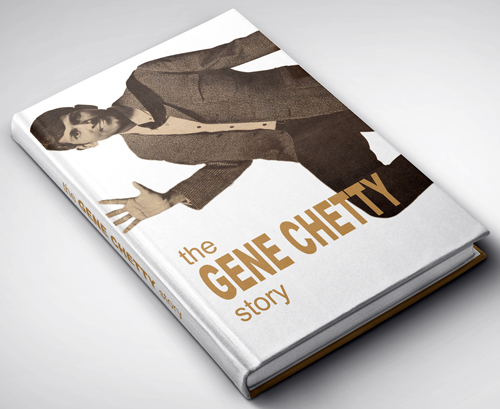 |
The Gene Chetty
Story - Dushy Gene Chetty / out of print
A
102-page paperback* (13 x 20 cm.), published by Gene
Chetty / Printed and bound in England by Print Resources, 2015.
*also published in hardback.
This is a short-run self-published book and I was lucky to
get one compliments of the author. It is packed with
anecdotes and stories from his early years in South Africa
when, as a 14-year old, he reached the final of a talent
competition singing 'Blueberry Hill' to his years as 'Gene'
of Gene & The Gents and his last bands, The Flames and The
Lions. Apartheid was the 'norm' in South Africa in the 1950s
and the young man's ambition was to live in a country where
his race didn't govern his opportunities. |
|
He writes with great
affection about some of his colleagues including
Paddy McDermott, Pete Cresswell and the late Henry
McCullough. Those friendships were maintained
through the years and in 2006, Henry invited him to
do a guest-spot at his gigs in Coleraine and
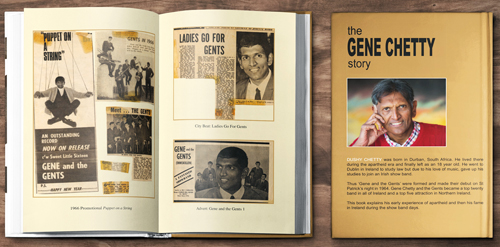
Enniskillen. There are 8 pages of photos and press
cuttings and it's nice to see my own Ireland's Own
feature on the band included. |
|
Reading about his first
meeting with Karin, it is no surprise that the
couple are still together after 53 years of
marriage. His career after show-business, first in
the toy industry with Mettoy and Lone Star right up
to his positions as a trainer with the Customs &
Excise division of the Civil Service and as a
lecturer at North Herts College is also covered. A
very enjoyable read with contributions from David
Williams, Seán McGrade, Ann Welsh, Eileen Drum,
Paddy McDermott, Peter Watson, Patricia Cullen,
Dermot Doherty. |
 |
|
|
|
|
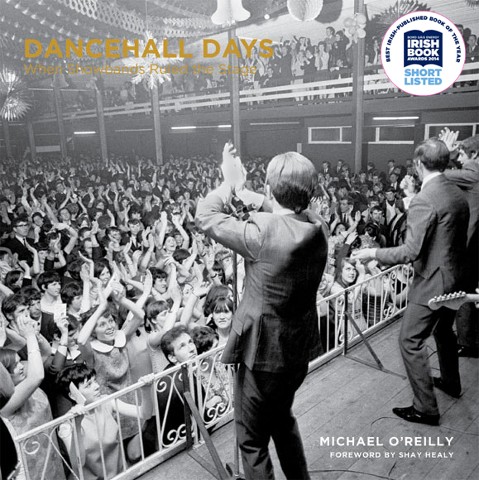 |
Dancehall Days -
When Showbands Ruled The Stage - Michael O'Reilly / €15.00
at books.ie

A
328-page hardback (30 cm. square), published by Gill &
Macmillan/ Printed and bound in Poland 2014. ISBN-13:
978-0717164608
Originally priced at €30.00, this massive tome can now be
bought for as little as €15.00. Buy three of them! A book of
photographs from the showbands' era by Michael O'Reilly who
covered New Spotlight Night-Out at the Television
Club, Harcourt Street for as long as it lasted. |
|
It's not just showbands either, you'll also find exclusive photos
ofvisiting stars such as David
Bowie, The Tremeloes, Guy Mitchell, Tiny Tim, Billy Fury and
others. As a photographer I just cannot fault this book. Not
alone are most of the photos exclusive to this book, they
are sharp and well-composed - I can just imagine the
positions he had to get himself into to take some of them!
Well done Michael and Gill & Macmillan - this is a gem.
Foreward is by Shay Healy. |
|
|
|
|
 |
Do
You Come Here Often? - The Golden Age of Showbands by Tony
Bagnall | €16.00
A 76-page paperback (page size A4), published by the author
and printed and bound by Apex Printers. ISBN No:
978-0-9927416-0-0
This a is a well-presented magazine-style book,
written and published by the former bass-player with The
Clippertones Showband, Tony Bagnall. It's actually a
collection of separate articles rather than a book but they
are very well-researched, written and proof-read. In
the book there are many rare, unpublished photographs, which
alone make it worth buying. The author is a retired
photo-journalist! |
It's
probably not surprising that Newry and Northern Ireland
bands are featured more than bands from the rest of the
island. There are chapters on The Clippertones, Paddy Cole,
Brendan Bowyer, Dickie Rock, LuvBug, Sandy Kelly, The
Soundtracks, Joe Dolan, Dick Barton, Maisie McDaniels, The
Hilton Showband, Arty McGlynn, Fr. Brian D'Arcy, Brendan
O'Brien, The Freshmen, The Epic Showband and many others -
36 chapters in all.
Every page is illustrated, 203 photos in
total, more than half of them in colour. The front cover
features The Hilton Showband with Eleanor Toner and the back
cover shows Joe Dolan onstage.
Note that it is a paperback with A4
size pages so you will have to take good care of this 'wee'
addition to your library! Highly recommended. |
|
|
|
|
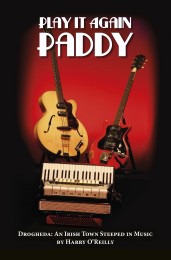 |
Play It Again
Paddy - Drogheda: An Irish town steeped in music by
Harry O'Reilly | €15.00
A
256-page paperback (page size 15 x 23 cm.), published by the
author and printed and bound by Anglo Printers Ltd. ISBN No:
978-0-9572916-1-4.
From the opening pages of this book, one can
tell that it was written by a musician who knows the music
business from the inside. I often think that only musicians
should be allowed to write books about bands! Fans just
cannot appreciate what it's like to set off in a wagon with
five or six other musicians on a Sunday afternoon (sometimes
earlier), travel for three or four hours, set up the gear,
play for two to three hours and spend the next four hours
travelling to arrive home in the early hours of the morning.
Harry O'Reilly, who was lead guitarist with The Toppers and
later The Chancellors has done this many times and he knows
how to put it down on paper.
|
|
First impressions of this fine book are the
impressive cover design and photography and the chunky feel
and weight of it. You know that you have bought something
worthwhile. Flicking through the pages, you will see 100+
photographs, many of them previously unpublished. It's
divided into 43 concise and easy to read chapters with
headings such as 'The early days in the '50s', 'The advent
of the showband era', 'Podger and The Toppers', 'From
Toppers to Chancellors' and 'Dermot O'Brien and his bands'. Each chapter
is liberally illustrated and very well written. Unlike some
books we have reviewed here, it clearly was proof-read.
Unfortunately, this is not always the case with
self-published books and for a grammar-nerd like myself,
it's comforting to know that the next page is not a
minefield of punctuation and spelling errors! My one small
reservation is that the 7-page index of names at the end of
the book doesn't include page references.
There are two forewards, one by Tommy
Leddy, former 'Topper' and founder of Drogheda's Sound Shop
and the other by guitarist Eamonn Campbell, now of The
Dubliners and a former 'Clubman'. Cover photography is by
John O'Reilly. I encourage anyone with an interest in '60s
music to add this book to their collection. It can be
ordered online
HERE for €15.00 plus €3.20 postage
and packing, a total of €18.20. Postage is a little higher
to addresses outside Ireland. |
|
|
|
|
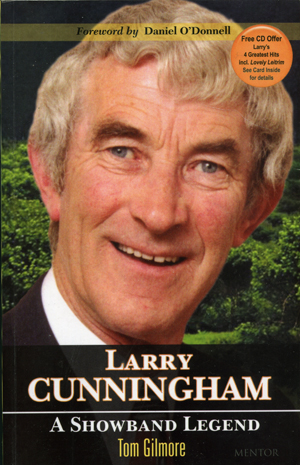 |
Larry
Cunningham - A Showband Legend by Tom Gilmore | Mentor
Books | €17.00
This is a
228-page paperback written by Tuam Herald journalist Tom
Gilmore, who also presents country music programmes on Galway
Bay FM. If a biography is an objective look at a person's
life, this definitely is not one. It looks at the life and
career of the Granard crooner through rose-coloured glasses
and what results is a sweeter-than-sugar tome.
There are 16 glossy pages of photographs,
showing Larry with the Granard minor football team, Larry
Gogan, Jimmy Magee, Albert Reynolds, Ronan Collins, Charlie
Pride, Colm Murray, Joe McCarthy, Joe Dolan, Paddy Cole, Sonny
Knowles, his wife, family and his various bands.
There are quite a few inaccuracies in the
text, but why allow the truth to get in the way of a good
story?! 'Tribute To Jim Reeves' did not reach No.28 in
the British charts - it peaked at No.40 - for one week. While
Larry was just an average, lucky singer of mainly Irish
ballads, corny country songs and that most awful hybrid,
'country 'n' Irish', chapter headings such as 'Teenage
Singing Star', 'The Country 'n' Irish Bono', 'They Would Have
Torn The Place Down', 'Married or Single For The Fans?',
'Paving The Way For U2, The |
|
Sawdoctors and The Pogues', 'Love 'n' Lust In The Ballrooms',
'Spawning Oasis', 'Sexual Encounters With Fans', would
make one think that the book was about a member of Led
Zeppelin! The Mighty Avons may
have been popular but, musicially, they were very limited.
This book would have been much better had it
not been written by a fan. The author's belief that Larry was
actually a great singer who sang great songs and fronted a
great showband is its downfall. It's the story of a different
Larry Cunningham than the one I thought I knew!
|
|
Review by John Lynch |
|
Building houses, carpentry, minor football and margarine were
not what I wanted to find out about in this instance; it was
music matters, as is the case with all books ab artists of any
genre. In that regard, the most interesting segment came from
the contribution of Mick Clerkin, without whose input the book
would have been a lot worse, in my view.
That said, in relation to your comment that the book would
have been better had it not been written by a fan, I wonder if
an outsider could even have come up with sufficient material
for such a purpose. Perhaps Paschal Mooney could have, as he
observed in John Coughlan's Swinging '60s compilation of
articles (book) that Larry's onstage charm belied a hard-nosed
business attitude.
Tom Gilmore did not find Larry to be very forthcoming in his
recollections of the showband scene, yet he was all enthusiasm
when it came to the aforementioned topics. Why draw the
curtains over the split from the Mighty Avons? Anyone who
forks up the asking price of a publication is entitled to be
told what they wish to know about a band of whom they were
fans and/or travelled miles to see. The author probably did
his best to plug the gaps but lacked the
in-depth knowledge to be taken seriously. Unlike Dickie Rock,
whose book, Always Me, I also read recently, Larry's memory
seemed more selective and he certainly couldn't have written
his autobiography, even with the co-operation of a
professional writer such as Dickie had in David McCullagh.
Thus, for these reasons, I don't think it's a book that will
stand the test of time, due to its exaggerations,
inaccuracies, sensationalist chapter headings and too much
trivial conversation filling out its pages. One discrepancy I
noticed claims that Larry's last Irish chart-topper, Slaney
Valley, was written especially for him by Paddy Kehoe, father
of former Wexford hurler, Padge. Possibly he recommended the
song to Larry, but to my knowledge, it was first recorded by
the Kinsellas, a singing family from that locality. There is a select
discography at the end; select meaning incomplete, as opposed
to availability or recommended. I doubt if Gilmore collected
or kept Larry's records according as they were released, and
why didn't he list the tracks on albums? Besides, there was
no such L.P. as 'Forty Shades of Green'; this is actually the
title of a 21-track compilation CD.
As for singles: my, doesn't Larry Gogan's Irish chart book
come in oh-so handy as a source of reference! He could have
listed chronologically A & B sides with their respective
catalogue numbers, as these are available on the internet from
which he took some information. It would have been more
relevant to the book's subject, instead of wasting space
talking about a namesake soccer player with whom Larry
Cunningham hadn't the remotest connection otherwise (such
nonsense might sound okay when mused over in a pub at closing
time, but not in print.)
Larry and his wife, Beatrice, obviously agreed to co-operate
with Gilmore's project, but I found the whole thing fell short
of a definitive biography. I enjoyed reading about his
Nashville experience and being clued in more on the Jim Reeves
Lifford gig and Irish tour of 1963, in addition to learning
about the origins of the song for which Larry will be best
remembered: Lovely Leitrim. From an availability point of view
nowadays, it's a pity the original recordings of Larry & Avons'
hits are not available on silverdisc. If the Pye label
offered them a contract as per their hopes, said recordings
would have been reissued by this stage, instead of current
generation fans and collectors having to settle for latterday
slapdash remakes.
But who is the Larry Cunningham you thought you knew? It's
all very fine making smalltalk about the weather and such, but
when anyone tries getting up close and personal with singers
or musicians, as Gilmore attemtped, 'tis then you find out
what they're really like. Not so much as being a personal
friend; but rather, in terms of establishing a good rapport
with them.
John Lynch |
|
|
|
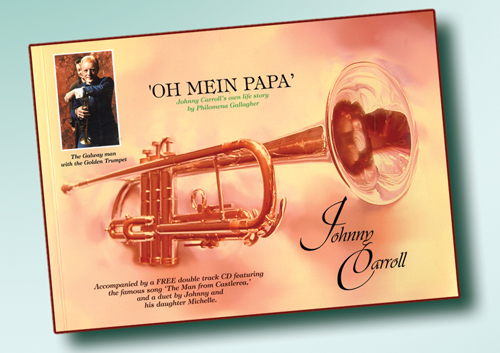 |
Oh Mein
Papa - Johnny Carroll's Own Life Story by
Philomena Gallagher | €15.00

This is a glossy softback book packed with photographs and
memories of the trumpeter from Castlerea. There is also a
complimentary 2-track CD inside. It is beautifully designed and
finished with an attractive swirly design on each of its 144
pages.
The biography ends at page 74 and the rest
of the book is quite fragmented with pieces by John Baird &
Gerry Gallagher, press releases, a chapter about the author, a
list of his albums, photos of Johnny with various well-known
people and some adverts. It's a pretty little book to flick
through now and then but it certainly could have done with some
professional editing. For some reason, many of the photos bear
the logo of a showbands' website (not this one)! |
|
|
|
|
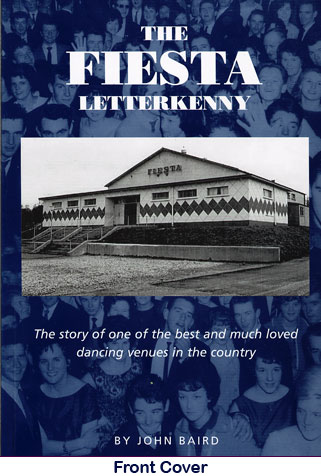 |
The Fiesta, Letterkenny by
John Baird | €12.50

Printed and bound by the Donegal Printing Company, with a
foreward written
by the band-leader of The Capitol Showband, Des Kelly, this
108-page paperback is full of memories, anecdotes and photographs from an era that
we all loved. It brings us on a nostalgic journey from 1962, when
the Keeney family built the dance-hall to 1979 when the
doors closed for the last time. |
 |
|
|
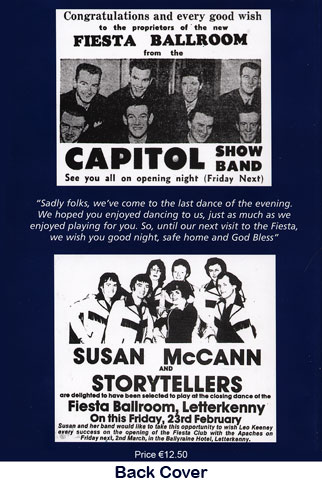
I counted 99 photos and 19 newspaper
adverts, many of them never published before. Some of
the rarer ones feature concerts on the steps of the
ballroom with The Blueglows and Denver
Showbands, local band The Jets with the neon-lit ‘Fiesta’
behind them and of course, the author's favourite band, The Capitol Showband, onstage on
opening night.
Proof-reading however, seems to have been
forgotten. There are too many errors in grammar, spelling and
punctuation.
Writing a book about a subject as narrow as one ballroom can't have
been easy and the author has
produced a decent little book.
It is available
from the author at €12.50. Don’t forget to add €2.00 for
postage and packing within Ireland. The author is also an established
maritime artist -
www.johnbaird48.com |
 |
|
|
|
|
'The
Freshmen Unzipped' by Derek
Dean | Merlin
Publishing | €13.00
If you haven’t yet read the extracts from
Derek Dean’s book, “The Freshmen Unzipped”
(Sunday World, 4 November 2007 - 6 pages), I
suggest that you sit down and pour yourself
a stiff drink first. A good choice of words
actually, because “stiff” and “drink” are
about all this book is about. It’s not
really The Freshmen Unzipped, it’s the
author himself unzipped, a state he claims
he spent most of his nights in when he
should have been concentrating on the band’s
great music. He boasts about “The Serpent”
or “The Viper” as if the rest of him was
just attached to his appendage and had to
follow it around.
Some paragraphs are just blatantly
embarrassing. Once is enough to tell us that
more than the crowd were standing to
attention for the National Anthem or that he
didn't need a rolled-up paper inside your
trousers. So what? This is just a cheap,
disgusting little rag and thankfully, I
won't have to spend €13.00 on it to see more
of the delusional drivel inside. The author
claims that the showband/dancing boom of the
‘60s had nothing to do with an upsurge of
interest in live music but was a result of
the contraceptive pill! That’s a new one on
me.
What a wonderful opportunity the author had
to write a decent book about one of our
greatest ever bands. Unfortunately, this
opportunity was spurned or missed by the
proverbial mile. As a personal memoir, it
probably achieves its purpose but the good
name of The Freshmen should not have been
used in the title. |
|
|
|
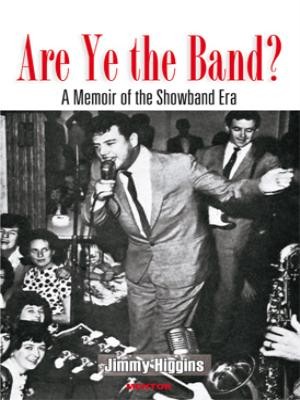
'Are Ye The Band? ' by
Jimmy Higgins |
Mentor Books | €15.00

And
now for something completely different!
Not a reptile to be seen and the only
rolled-up newspaper needed was The Tuam
Herald to stop Billy Barrett from
snoring in The Raindrops VW minibus.
This humourous ramble through his years
travelling through Ireland, Britain,
Europe and the USA in various wagons
with The International Showband, The
Millionaires, The Raindrops, The Big
Time and subsequently into management by
trumpeter Jimmy Higgins is primarily a
fun book. Packed with photos and
'colourful' stories from the road, this
natural storyteller outlines what life
was like for a journeyman musician,
working with bands who almost, but never
quite did, make it into the top echelon
with The Royal, The Dixies, The Capitol
and The Miami.
|
|
From
the evening that his mother told the
14-year old that he was "the image of
Johnny Flynn" as he, dressed in his
band-suit, waited nervously to be picked
up for his very first showband gig to
the night that they decided to call it a
day, you will enjoy this trip down
Memory Lane. A
very enjoyable read - well done Jimmy. |
|
|
|
 |
|
Green Beat by Darragh O'Halloran | Brehon Books |
€17.50
What exactly is this book supposed to be? An objective no-holds barred
look at the ‘60s beat-scene in Ireland or simply a vehicle to document the
pathetic musical snobbery that dominated the Irish music-scene during that
decade? The more I read through this 224-page book by Daragh O’Halloran
(published by Brehon Press), the more I realise, sadly, that the author
walked in with his eyes closed and questioned almost nothing. Paragraphs
and quotes from magazines such as ‘Spotlight’ and ‘Hitsville’ are quoted
verbatim as fact when even the most naïve music fan is aware that they
were little more than propaganda-sheets for bands and groups with healthy
budgets. Quotes from Pat Egan and B.P. Fallon are treated with reverence
when truly, they were only two non-musicians who used the pages of those
magazines to publicise their own friends’ bands. |
|
It was far more important to be ‘cool’ than to be a brilliant musician.
B.P. saw to that. You had to be ‘cosmic’ and have a ‘vibe’ and if you had,
you had it made. There’s an ongoing ‘sneer’ throughout the book about
showbands with words like ‘agricultural’, ‘ageing’ and ‘haircuts’
liberally used. The true facts about showbands were that the vast majority
of their members came from terraces or estates in small rural towns where
unemployment was rife. They saved some money, bought an instrument and set
out to make a decent living doing what musicians want to do - play music.
There was very little ‘agricultural’ or ‘ageing’ about showbands in the
early ‘60s. Just because B.P. or Pat said so doesn’t mean that it was
fact.
The pervading theme that runs throughout this book is that it was much
‘cooler’ to be in a beat-group (or a 4 or 5 piece 'covers-band) than to
don a suit and be part of an outfit known as a 'showband'. Yet, The Black
Eagles are described as ‘one of many groups at the time doing covers of
Small Faces, Yardbirds and (Rolling) Stones material’. Drummer Dave
Pennefether was criticised by Paul Brady as ‘taking the King’s shilling’
when he left the beat-scene to join Earl Gill’s band. Thankfully Paul, we
haven’t had ‘the King’s shilling’ in our country for many a long year! Why
was Brady not asked how his joining of The Johnstons (a folk/ballad group)
differed so much to Pennefether joining Earl Gill's Band - having been
quoted on page 205 "I didn't really have an awful lot of time for the
ballads. Why are all these people singing all this shit from 200 years
ago? It was all a bit fake to me". Paul Ashford speaks some sense when he
recalls Philip Lynott calling him a ‘breadhead’ when he joined The Miami –
but as Ashford says, ‘I was a musician and I wanted to play’. Slightly
ironic that I just happened to see a clip of the same Phil Lynott on BBC
last night singing a classic beat-song –
‘Jingle Bells’!
A former member of Rootzgroop is quoted as saying that he
‘hated showbands’.
That’s an incredibly sweeping, all-encompassing statement. He goes on to
say ‘we looked down our noses at them, we thought they were crap’. I
seriously wonder which showbands or how many different showbands he
actually heard – live? The Freshmen? Crap? The Plattermen? Crap? Dave Glover, The Skyrockets (with Henry McCullough)? Crap?
Derrick and The Sounds (with two members of Taste in the line-up)? Crap?
The Jokers or Johnny Quigley with one of Europe's top drummers, Tommy McMenamin laying down
the beat? Crap? The Witnesses with Colm Wilkinson out front? Crap? That
particular musician's blanket put-down of showbands should have been
questioned and analysed.
Two phrases in the book clearly illustrate the angle from which the author
approaches his subject. In reference to The Dreams’ first single, he
states that it was written for them by "safe, middle-aged favourites, The
Tremeloes". In fact, Alan Blakely who wrote ‘I Will See You There’ was 26
in 1968 – hardly middle-aged! Yet, in 1970, Granny’s Intentions’ album
‘Honest Injun’ “showcase the talents of youthful singer Johnny Duhan”. In
1970, Johnny Duhan was only a couple of years younger than the ‘safe,
middle-aged’ Alan Blakely!
The author should have embedded a few facts in his head before he started
talking to people, some of whom have coloured and biased memories of a
bygone era. There were two kinds of bands in ‘60s Ireland and no, I don’t
mean beat-groups and showbands – I mean charts cover-bands and bands who
mixed originals with lesser-known album tracks and songs from obscure
blues and soul artistes. Many of the cover-bands were known as showbands
and they played in a nationwide circuit of ballrooms, marquees and
dance-halls but there were also scores of smaller cover-bands who played
in Tennis Clubs and local halls.
Let’s not forget, the word ‘showband’ was nothing more than a tag. The
vast majority of working showbands in the ‘60s were not ignorant hayseeds
who thought Dublin began and ended in Croke Park. Yes, they wore suits,
usually very smart, tailored suits but so did The Beatles in the early
days. The Wheels are pictured on page 113 wearing suits as are The Beau
Brummels on page 146 (oh but of course they were ‘cool’ people!). Wearing
casual clothes onstage didn’t automatically instil blinding talent in a
musician. Neither did filling ones mouth with tomato-ketchup and spitting
it over the crowd or having your photo taken with a noose around your
neck. That particular photo of The Uptown Band is more immature and
irresponsible than it is avant-garde and mould-breaking.
Some of the former beat-group musicians who were interviewed for this book
obviously believe the myth that there was a massive city/country,
beat-group/showband divide. But many of them were members of groups that
were little more than small showbands themselves! I have heard beat-groups
who played a complete programme of covers or ‘interpretations’ of other
bands’ work and I have also been in band (a so-called ‘showband’) which
belted out Otis Redding, Wilson Pickett, James Brown, Eddie Floyd and
Arthur Conley soul numbers with punchy brass arrangements. Can the smaller
band feel ‘superior’ because they are based in a city and don’t wear
suits? Showbands were often based in rural towns and had no choice but to
travel because their towns, unlike Dublin and Belfast, simply didn’t have
enough venues.
There are references to unscrupulous showband managers buying boot-loads
of singles and dumping them ‘in the Bog of Allen’ (of course it had to be
a bog) in order to get their records into the charts. Terrible behaviour
altogether! But when Strangers' manager Jimmy Dunne bought a cart-load of
Strangers’ singles for every jukebox in the country – it was funny and
innovative!
The same managers are strongly criticised for ‘stealing’ musicians from
beat-groups to form new showbands or to fill positions in others. If the
beat-groups had got their own houses in order, joining a showband (and
‘lowering’ oneself to play dreaded ‘covers’) would not have been a
financial necessity. Yet when Granny’s Intentions were disintegrating and
brought in first Greg Donaghey, later Noel Bridgeman and Pete Cummins, it
was seen as progress.
‘Tell Her’ by The Movement is eulogised as being ‘one of the beat-scene’s
most coruscating and spirited singles’ – hold on Daragh, it was a cover!
So were ‘Run Baby Run’ (The Bye-Laws), ‘Look Out, Here Comes Tomorrow’
(The Strangers), ‘Do You Wanna Dance?’ (The Vampires), ‘So Sad’ (The
Greenbeats), ‘Lovely Loretta’ (The Others), ‘Walk Like A Man’ (Some
People) and ‘River Deep, Mountain High’ (Purple Pussycat) and others.
Danny Hughes supposedly recorded 'Hi Ho Silver Lining' but whose voice was
it? It was the voice of a high-profile beat-group drummer!
But ... ‘Holiday Girl’ (The Newmen), ‘A Knock On The Door’ (The Airchords),
‘Just To See You Smile’ (The Freshmen), ‘Love And The Country’ (The
Riviera), ‘Baby I’m Your Man’ (Miami & Dreams), ‘I’d Still Believe In You
Baby’ (Stage 2), ‘When I Look Around Me’ (The Times) were all originals
written by members of those bands – showbands!
The point I’m trying to make here is that it was NOT a
black and white divide. There were good and bad beat-groups just as there
were good and bad showbands. I’ve listened to enough ‘crap’ over the years
about how all the cool people were in groups and all the buffs were in
showbands – it’s simply not true and it’s very disappointing that the
author has allowed himself to be led in this way by people whose
collective sneering at showbands should have mellowed over the past 40
years.
There are paragraphs, even pages on groups like The Viscounts, The
Caravelles (Greenbeats), The Strangers, Bluesville, The Action, The Chosen
Few, The Kingbees, The Creatures, The Chessmen, Granny's Intentions, The
Movement, The People, Eire Apparent (hardly beat!), The News, Sweeney's
Men (a folk group - they have no place here apart from the link with The
People), Skid Row, Rootzgroop, The Orange Machine, The Bye-Laws and a
section on Northern Beat including Them, The Wheels, The Mad Lads, The
Method, Andwella's Dream, Taste and Granny's Intentions.
Musicians and 'heads' such as John Keogh (sometimes I wonder about John's
memory!), Shay Healy (hardly a leading light in the beat-scene), Ted
Carroll, Brush Shiels, Jonathan Ryan, Terry Brady, Alan Dee, Kevin Dunne,
Jimmy Dunne, Ronan Collins, Len Guest, Maxie McEvoy, Deke O'Brien, Ian
Whitcomb, Jerry Dennon, Peter Adler, Mick Molloy, Sam Smyth (always plenty
to say but was he actually involved at all?), Ian McGarry, Ditch Cassidy,
Paul Ashford, Tony Boland, Bobby Kelly, Jay Malone and others are quoted
at length. A comprehensive and impressive line-up you might say - until
you read on and find that many of their contributions came from old
interviews published many years ago in magazines like Spotlight and books
and papers by Ian Whitcomb, Jerry Smith, Johnny Rogan, Mark Prendergast,
Vince Power and others.
Another point which strikes me about this book is the number of
significant groups which are not included. A cursory nod (or not even that
in some cases) to Sugarshack (Brian Downey), Chapter 5, The Difference
(Paul Keogh), The Deep Set, Grassband, The Gentry, The Intruders, Jangle
Dangle, Reform, The Wild Breed, The Pickford Set, Heatwave, The Others,
Some People, Beat-Route, The Mousetrap, Zebedee, The Urge, Strange Brew,
The Fugitives, Dead Centre, Stop Press, Love Street, Demon Duck, Ned
Spoon, Magazine, Judge Joe & The Jury - there are just too many left out.
When writing a book to fill a gaping niche like this one, it's not enough
to write a thesis. It's not enough to go to the National Library and copy
quotes and paragraphs written many years ago. It's not enough to listen to
some 40-year old memories and opinions and not even question them. Though
the author did speak at length with many of those involved, there are many
others out there who experienced this era and whose memories and views
could have been featured.
In my opinion, Part Five which covers the experiences of John Byrne and
Declan Mulligan in America could have been left out. Brehon Books
appointed an editor, Nicola Keenan, for this book but apart from
proof-reading, what exactly did she do? To include those pages at the
expense of some of the groups and personalities mentioned earlier was in
my opinion, a poor call.
Now to the layout, the photographs and the cover. To be honest, the whole
book looks a bit like the annual report from a financial institution.
Layout is incredibly unimaginative when compared to the book's British
counterpart, 'Beatboom' (Dave McAleer - Hamlyn 1994 - ISBN 0-600-58009
-1). That particular book uses only spot colour throughout but because of
it's excellent design and layout, is far more attractive to leaf through).
I realise that full colour printing is more expensive than mono (the
difference is not nearly as much as it was in the '70s or '80s) but a
colourful era like the '60s to be documented totally in black and white is
just boring. Most of the photos have an over-riding grey tint, something that
can be fixed in a few seconds in an application such as Adobe Photoshop. I
love the cover photo (The Creatures onstage at The Five Club) but surely
they could have stretched their budget a little and included a colour
section? One other rather annoying fact is the absence of an index, almost
obligatory in a non-fiction book.
And finally, a couple of clangers.
Page 13: "The Royal
Showband (featuring Brendan Bowyer) was the first to take the plunge in
1962, releasing 'Come Down The Mountain Katy (sic) Daly'". It was
Katie Daly and it was the late Tom Dunphy.
Page 123: “Rory (Gallagher) took Eric D’Amery (drums) and Norman
Kitteringham (bass) away from the others and formed The Taste”. It was
Norman D’Amery and Eric Kitteringham.
Page 128: “Richie McCracken and John Wilson were previously members of
a Northern Ireland power-trio called Cheese”. That is true but it
would have been fitting to mention that prior to Cheese, they were both
members of a showband, Derrick & The Sounds where McCracken played lead
guitar, not bass. It is said that if you can remember the '60s, you weren't
there. The author wasn't. |
|
|
|
Gateway |
Showbands Index |
Beat-Groups Index |
Ceili bands |
Contact IBA |
|
Band photos, cuttings, posters, adverts,
line-ups, etc. to be added to the online archive are always welcome and
appreciated. If you have anything to contribute, please contact us. |
|
© FBK | 2001-2020 |